
Categories
Garage Door Installation & Replacement

Garage Door Panel Damage: Repair One Section or Replace the Whole Door?

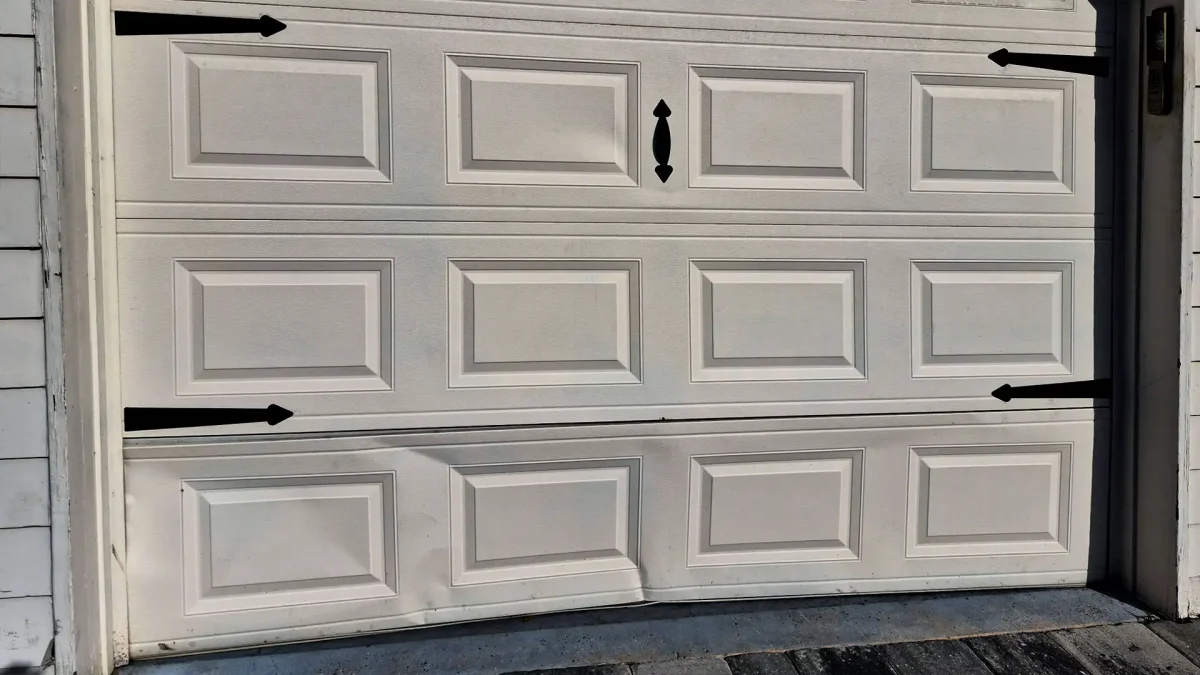
You back out before sunrise, hear metal scrape, and see the bottom section of your garage door folded inward. The opener strains, the door rises six inches, and one side hangs lower than the other.

A1A Overhead Door Company helps Jacksonville-area homeowners decide whether that damage calls for one section or an entire new door. We are a family-owned, non-franchised company based at 1520 Emma Ln in Neptune Beach, incorporated in 2000, and we give direct answers without dressing up a bigger sale as the only option.

The honest answer is that a damaged panel can sometimes be replaced by itself. It can also be the visible part of a larger structural problem, especially when the impact has affected hinges, tracks, rollers, cables, or the door’s wind-rated assembly.

This guide explains what separates a sensible panel replacement from money spent postponing the inevitable.

Can One Garage Door Panel Damaged Section Be Repaired?

Yes, if the damage is limited and the correct replacement section is available. Amarr explains that some doors can be repaired with a section replacement, while older doors may require complete replacement because door dimensions and technology have changed.

A garage door is not one sheet of metal. Most residential doors are made from horizontal sections joined by hinges, so a technician may be able to remove one damaged section and install a matching one without discarding the rest of a sound system.

Damage Limited to One Section

A single-section replacement is most promising when one panel has a shallow-to-moderate dent, split skin, localized corrosion, or impact damage that has not distorted adjacent sections. The door should still sit square in the opening, and the tracks, hinges, rollers, end stiles, cables, and spring system must remain serviceable.

Cosmetic damage and structural damage are not the same. Scratched paint may need surface work, while a crease across a section can weaken it even if the opener still moves the door.

A Replacement Section That Actually Matches

The manufacturer, model, section height, panel profile, insulation construction, color, and reinforcement all matter. A section that looks close from the driveway may have the wrong weight, thickness, hinge spacing, or internal construction.

That is why we identify the door before quoting a section. A1A works with C.H.I. and Amarr doors, and we assess whether a correct section is available rather than promising a match before seeing the system.

The Rest of the Door Is Worth Keeping

Panel replacement makes sense when the remaining sections are solid, the hardware is in reasonable condition, and the door has useful service life left. It is harder to justify when the other sections are rusting, delaminating, sagging, or repeatedly needing repairs.

The question is not simply, “Can this section be changed?” The better question is, “Will the complete door be safe, compatible, and worth owning after it is changed?”

When Should You Replace the Whole Garage Door?

Replace the whole door when a new section would leave you with an unreliable, mismatched, or questionable system. Spending less today is not a bargain if another major repair is already visible.

Multiple Sections Are Bent or Separated

An impact can travel beyond the obvious dent. If two or more sections are bowed, hinge mounting points are torn, or the tongue-and-groove joints no longer meet correctly, isolated panel work may not restore proper travel or sealing.

Look at the door from inside with it fully closed, but do not touch spring or cable hardware. Daylight between sections, uneven gaps, and sections that no longer stack evenly deserve a professional inspection.

The Door Is Older and Parts Are Scarce

A discontinued model can turn a simple idea into an expensive hunt. Amarr notes that limited parts availability can make repairs to older doors costlier, and it identifies age and poor operation as reasons to consider replacement.

Even when a used or “close enough” panel can be found, it may not belong in that door system. We would rather tell you a match is not responsible than force incompatible parts together.

Structural Damage Reaches the Hardware

A bent section can pull hinges out of line, push rollers against the track, or change how load moves through the door. An opener may keep dragging the door for a while, but that does not prove the door is balanced or safe.

If the door is crooked, unusually heavy, supported by one side, or shows spring or cable damage, the answer to “Can I keep using it?” is simple: No. Stop using the door. Do not pull the emergency release, loosen brackets, or try to straighten the section.

DASMA warns that spring-system cables and bottom brackets are associated with high tension and should be handled by trained technicians. It also says awkward manual operation can indicate an out-of-balance spring system.

Appearance and Performance No Longer Line Up

A replacement panel can be mechanically correct and still look different. Years of sun, salt air, paint fade, and surface wear can make a new factory-finished section stand out against the old ones.

Some owners accept that difference to preserve a good door. Others decide that a complete garage door installation is the better use of the budget because it addresses appearance, insulation, hardware compatibility, and remaining service life at once.

Does Jacksonville Weather Change the Decision?

It should. Jacksonville, the Beaches, Nassau County, Clay County, St. Johns County, and Camden County face wind, wind-driven debris, heavy rain, humidity, and coastal exposure that can turn “just a dent” into a performance question.

Wind Rating Is a System Question

Wind-rated doors are selected for a location and opening, not by picking a strong-looking panel. Amarr’s residential wind-load tool uses factors including basic wind speed, exposure category, impact-resistance needs, building dimensions, enclosure classification, and door-opening size.

That matters after panel damage because the complete assembly includes sections, reinforcement, track, brackets, fasteners, and installation details. A substitute section should not be assumed to preserve the door’s documented configuration.

If a damaged section belongs to a storm-rated door, identify the door and verify the replacement path before work begins. A1A can also explain when moving to a hurricane-compliant garage door is the sounder option for the opening.

Corrosion Can Be More Than Surface Deep

Salt exposure and humidity can work into chipped finishes, section edges, hardware attachment points, and bottom areas that stay damp. Rust staining alone does not decide the job, but corrosion around fasteners or reinforcement deserves closer attention.

A new bottom section on top of three deteriorating sections is rarely a strong long-term plan. The condition of the full door has to drive the recommendation.

Water and Wind Sealing Matter

A creased section may no longer meet the adjacent section evenly or press against perimeter seals as intended. That can admit wind-driven rain and place uneven stress on hinges and rollers during operation.

Panel damage near the bottom seal can also prevent the door from closing evenly. If the door does not reach the floor squarely, stop treating the issue as cosmetic.

What Does Garage Door Panel Replacement Cost in Jacksonville?

There is no responsible flat range that covers every Jacksonville panel job. A basic section on a common door and a reinforced section on a storm-rated assembly are different jobs, so the useful number is a written quote for the exact door and damage.

The Door Identification Changes the Price

A basic non-insulated section and an insulated, reinforced, windowed, or specialty-finish section are different parts. Width, section height, steel gauge, backing material, glass, design, and manufacturer all affect availability and cost.

Shipping can matter because a garage door section is large and easily damaged in transit. A discontinued section may be unavailable at any reasonable price even when the labor itself would be straightforward.

The Damage Beyond the Panel Changes the Scope

The quote may include hinges, rollers, struts, brackets, track correction, weather seal, or other components damaged in the same event. Spring work is a separate safety-sensitive scope and should never be treated as a casual add-on.

A1A starts with the full door, not just the dent. Our garage door panel replacement service explains how we inspect the frame, hardware, and all sections before recommending work.

Compare the Complete Numbers

Ask for the installed panel-replacement price and the installed whole-door price based on the same opening. Then compare what remains old, what becomes new, whether the appearance will match, and whether the repaired assembly is appropriate for the location.

A low panel quote is not automatically the smart choice. A full replacement is not automatically necessary either.

What Will a Technician Check Before Recommending Repair or Replacement?

A good decision comes from inspection, identification, and comparison. It does not come from one photo of the dent.

Door and Section Identification

The technician should look for labels, model information, section dimensions, panel pattern, construction, reinforcement, and color. This determines whether a suitable section exists and what manufacturer guidance applies.

Photos are useful for starting the conversation, but measurements and on-site condition settle it. Do not order a panel from appearance alone.

Alignment and Operating Condition

The inspection should cover how the door sits in the opening, how sections meet, and whether tracks, rollers, hinges, and attachment points were shifted. The technician should also evaluate door balance and the spring-and-cable system without asking the homeowner to operate a dangerous door.

DASMA says the track and sections work together as a system and recommends using track designed for the specific replacement door. That is particularly important when the conversation changes from one section to a whole new door.

Wind-Load and Opening Requirements

For a storm-rated assembly, the technician needs to account for the installed door configuration and the requirements applicable to the opening. Product selection should be based on documented requirements, not a vague “hurricane door” label.

If complete replacement is recommended, ask what door, track, reinforcement, and hardware are included. Our job is to explain what you are buying and why.

How Do You Make the Final Repair-or-Replace Decision?

Choose panel replacement when damage is truly isolated, a compatible section is available, the remaining door is sound, and the installed cost makes sense. Choose complete replacement when damage is widespread, compatibility is uncertain, the door is deteriorated, or the repair leaves too much old risk behind.

The Upfront A1A Test

We weigh safety first, compatibility second, and value third. Appearance matters, but it does not override a crooked door, compromised attachment points, or the wrong section for a rated assembly.

That is the plain answer Jimmy Fuqua expects the company to give. “When honesty, integrity, and the customer still count” means telling you when one section is enough and when it is not.

Schedule an Assessment

Call 904-821-8463 during our business hours, Monday through Saturday from 7 AM to 8 PM. We are closed Sunday, and appointment timing depends on the schedule when you call.

A1A serves Jacksonville and nearby communities across Duval, Nassau, Clay, and St. Johns counties in Florida, plus Camden County, Georgia. If the issue extends beyond the panel, our garage door repair team can evaluate the complete system.
Categories
Blog Garage Door Installation & Replacement

Which Garage Door Opener Fits Your Jacksonville Home?

garage-door-openers-section

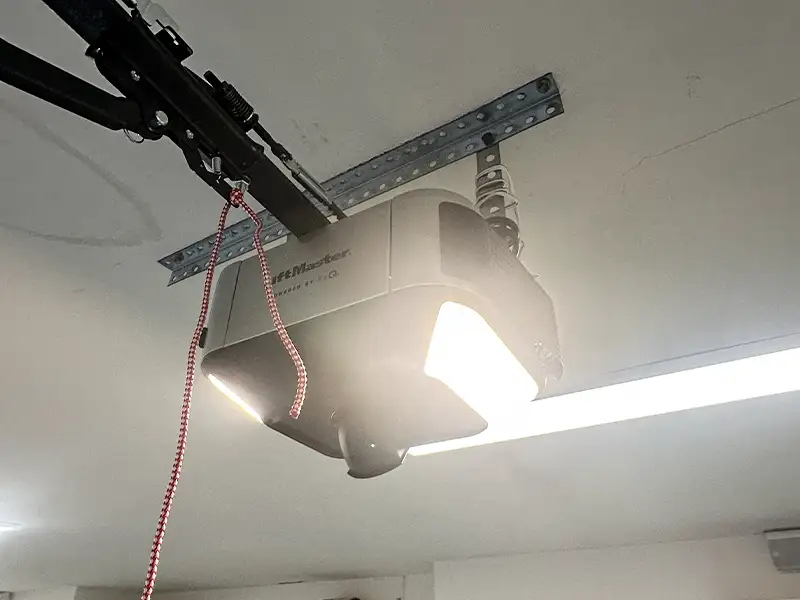
Choosing the right garage door opener isn’t always straightforward, especially with multiple drive types and features to consider. The right choice depends on your door’s weight, your garage’s layout, how often you use the door, and even how much noise you’re willing to live with. Getting it right the first time also means fewer garage door repair calls down the road, since the wrong opener for your setup tends to wear out faster and strain other parts of the system.

Here’s a practical breakdown of the opener types available for Jacksonville homes and how to figure out which one actually fits yours.

Why the Right Opener Choice Matters

A garage door opener does more than just lift and lower the door. It works alongside the springs, tracks, and cables as one connected system. An opener that’s mismatched to your door’s weight or usage pattern puts extra strain on everything else, which often shows up later as a spring failure, track misalignment, or a motor that burns out well before it should.

Picking the right opener from the start, or replacing an aging one before it fails completely, is one of the simpler ways to avoid an unplanned garage door repair down the line.

Belt Drive Openers

Belt drive openers use a rubber belt reinforced with steel to move the door along the track. They’re one of the quieter options available, which makes them a strong fit for garages that sit right below a bedroom or living space.

Best For

  • Homes with a garage under or beside frequently used rooms
  • Anyone who wants a quieter opener without giving up reliability
  • Daily use where consistent, smooth operation matters

Belt drive systems tend to run smoothly over time with less noticeable wear noise, though like any opener, they still need occasional inspection to keep the belt tension correct and the track clear.

Chain Drive Openers

Chain drive openers use a metal chain to pull the door along the track, similar to a bicycle chain. They’re a proven, durable option and tend to be more budget-friendly than belt drive systems.

Best For

  • Detached garages or garages farther from living spaces where noise is less of a concern
  • Heavier doors that need a strong, dependable lifting mechanism
  • Homeowners looking for a reliable option without a premium price tag

Chain drive openers are workhorses, but they do run louder than belt drive systems, and the chain itself needs periodic lubrication to keep operating smoothly.

Wall-mount Openers

Wall-mount openers sit on the wall beside the door rather than running along the ceiling track. This frees up ceiling space, which is useful for garages with limited overhead clearance or homeowners who want to use that space for storage.

Best For

  • Garages with high ceilings used for storage racks or lifts
  • Homes where ceiling space is at a premium
  • Anyone wanting a cleaner, less cluttered garage ceiling

Because the mechanism is positioned differently than a traditional track-mounted opener, wall-mount systems are often a good match for garages that don’t fit the standard layout.

Matching the Opener to Your Door

Beyond drive type, the opener itself needs to be sized correctly for your door’s weight and daily use.

Door Weight and Size

A heavier door, such as a solid wood or insulated steel door, needs an opener with enough horsepower to lift it consistently without straining the motor. An opener that’s underpowered for the door will wear out faster and put uneven stress on the springs and tracks.

Frequency of Use

A door that opens and closes multiple times a day, especially for a primary vehicle entrance, benefits from a heavier-duty opener built for frequent cycling. A secondary or rarely used door has more flexibility in opener choice.

Existing Hardware Condition

If your current springs, tracks, or cables are already worn, installing a new opener without addressing that wear just shifts the strain onto a new motor. A full inspection before installing a new opener helps confirm the rest of the system is ready to support it.

Signs Your Current Opener Needs Attention

Sometimes the decision isn’t about upgrading proactively but responding to a system that’s already struggling.

Warning Signs to Watch For

  • The opener strains, stalls, or reverses unexpectedly during operation
  • Grinding, screeching, or unusual noises coming from the motor unit
  • The door opens or closes unevenly, or hesitates partway through the cycle
  • The remote or wall switch works inconsistently
  • The opener runs but the door doesn’t move, which often points to a belt, chain, or gear issue rather than the opener itself

Catching these signs early usually means a simpler garage door repair rather than a full opener replacement.

LiftMaster and Genie Openers for Jacksonville Homes

A1A Overhead Door repairs and installs LiftMaster and Genie openers across belt, chain, and wall-mount systems for residential properties throughout Jacksonville and the surrounding area. Both brands offer reliable options across different drive types, and the right fit comes down to your specific door, garage layout, and how you use it day to day.

Why Brand and Installation Quality Both Matter

An opener is only as good as its installation. Even a well-built LiftMaster or Genie unit will underperform if it’s not properly aligned with the door’s travel, safety sensors, and existing hardware. That’s why opener installation and garage door repair should be handled by someone familiar with the full system, not just the motor unit itself.

Getting Opener Installation and Repair Done Right in Jacksonville

A1A Overhead Door has been serving Jacksonville and the surrounding communities for nearly 30 years as a family-owned, non-franchised business. Whether you’re installing a new opener, replacing an aging one, or dealing with a garage door repair that’s turned out to involve the opener itself, our team assesses the full system rather than just swapping parts.

Licensed and Locally Accountable

Every installation and repair is performed under our own county specialty contractor licenses, GD17 in Duval County and BL5747 in St. Johns County, never subcontracted out to a crew you haven’t met.

Backed by a Real Warranty

Opener installations and repairs are backed by a one year warranty on parts within the scope of the work performed. If something needs attention afterward, we come back out.

Frequently Asked Questions

What’s the difference between a belt drive and chain drive opener? Belt drive openers use a reinforced rubber belt and run quieter, making them a good fit for garages near living spaces. Chain drive openers use a metal chain, run louder, and tend to be more budget-friendly while still offering strong, dependable lifting power.

Is a Wall-mount opener a good option for every garage? Wall-mount openers work well for garages with limited ceiling clearance or homeowners who want the ceiling space free for storage. They’re less about being universally better and more about fitting a specific garage layout.

Can I install a new opener without checking the rest of my garage door system? It’s not recommended. An opener works alongside the springs, tracks, and cables, so worn hardware can strain a new opener and shorten its lifespan. A full inspection before installation helps the new opener perform the way it should.

Do LiftMaster and Genie openers require different maintenance? Both brands are reliable when properly installed and maintained, and general upkeep like checking the drive mechanism and keeping tracks clear applies across both. Specific maintenance needs can vary by model, so it’s worth asking your technician what your particular unit needs.

What areas does A1A Overhead Door serve for opener installation and garage door repair? A1A Overhead Door serves Jacksonville, Neptune Beach, Atlantic Beach, Jacksonville Beach, Ponte Vedra, Ponte Vedra Beach, Nocatee, Fernandina Beach, Amelia Island, Yulee, Callahan, Hilliard, Orange Park, Middleburg, Green Cove Springs, St. Augustine, St. Augustine Beach, Kingsland, St. Marys, Woodbine, and nearby communities across Duval, Nassau, Clay, and St. Johns Counties in Florida and Camden County in Georgia.

Find the Right Opener for Your Home

Choosing between belt, chain, and wall-mount openers comes down to your garage’s layout, your door’s weight, and how you use it every day. A1A Overhead Door has been helping Jacksonville homeowners make that decision, and handling the garage door repair work that comes with it, for nearly 30 years. Call (904) 821-8463 today to talk through the best opener option for your home or to schedule a repair on your current system.

Categories
Blog Garage Door Installation & Replacement

Broken Garage Door Spring in Jacksonville? Here’s Whether You Should Repair or Replace It

spring-repair-section

A broken garage door spring forces a decision most homeowners never expected to make. Do you replace just the spring, or is this a sign the whole system needs a closer look? The answer depends on a handful of factors that are easy to sort through once you know what to check.

If you’re dealing with a broken garage door spring in Jacksonville right now, here’s how to think through the decision and what to expect either way.

How to Tell Your Spring Has Actually Broken

Not every stuck or heavy door means a broken spring, but there are a few clear signs that point directly to it.

Clear Indicators of a Broken Spring

  • A loud bang coming from the garage, often the moment the spring itself snaps
  • The door will not stay open on its own or falls when you try to lift it manually
  • A visible gap in the coil of the spring if you can safely see it from a distance
  • The opener strains, stalls, or reverses immediately when trying to lift the door
  • One side of the door appears to droop or hang unevenly

If you see any of these, treat the door as out of service until it’s inspected. A door without a working spring has lost its main source of lift, and using the opener anyway can cause additional strain on the tracks, cables, and motor.

Torsion Springs and Extension Springs Wear Differently

Understanding which type of spring your door uses helps explain why some doors need a simple swap while others reveal bigger issues once a technician takes a closer look.

Torsion Springs

Mounted horizontally above the door, torsion springs twist to store the tension that lifts the door. They generally handle more cycles before wearing out, but they store enough force that replacing one without the right tools is genuinely dangerous.

Extension Springs

These run along the horizontal tracks on either side of the door and stretch to create lifting tension. They’re common on older systems and tend to show wear differently, sometimes stretching unevenly before they fail completely.

Either type needs to be sized to match the door’s specific weight and balance point. A spring that’s close but not exact will wear out faster and put more strain on everything else the door relies on.

When Repairing the Spring Is the Right Call

In most cases, a broken spring on an otherwise healthy door is a straightforward repair. If the door itself has been operating well, the tracks are straight, the opener has been running smoothly, and the only failure is the spring, replacing it correctly resolves the issue.

What a Proper Spring Repair Includes

A repair done right goes beyond just installing a new spring. It should also cover:

  • Confirming the correct spring size and tension for your specific door
  • Checking cables and drums for wear caused by the sudden loss of tension
  • Verifying that tracks are still aligned after the hard stop from the failure
  • Testing the opener to make sure it wasn’t strained during the break
  • Balancing the door so it opens and closes evenly once the new spring is in place

A door that’s inspected fully after a spring failure, not just patched with a new coil, is far less likely to have a repeat issue a few months later.

When a Broken Spring Points to a Bigger Problem

Sometimes a broken spring is the first visible sign of a door that’s been struggling for a while. A few situations are worth watching for.

Multiple Components Showing Wear

If the spring failure comes along with rusted tracks, worn rollers, or an opener that was already having trouble before the spring gave out, replacing just the spring may only be a short-term fix. An honest assessment of the full door, not just the failed part, is the only way to know whether more work is actually needed.

Older Doors Without Wind Load Ratings

Florida has required wind-load-rated garage doors since 2002. If your home’s door predates that standard, a spring failure can be a good moment to have the entire door evaluated, especially heading into hurricane season when a properly rated door matters even more.

Repeated Spring Failures

A spring that fails again within a year or two of a previous repair usually points to something else going on, whether that’s an improperly sized spring from an earlier repair, a door that’s out of balance, or hardware that’s putting uneven strain on the system.

What to Expect From a Spring Repair Visit

Knowing what a technician actually does when they arrive can make the whole process feel less uncertain.

Inspection First

Before any replacement happens, the door should be inspected as a full system rather than just the broken spring. This includes the tracks, cables, rollers, and opener, since a sudden spring failure can put stress on all of them.

Correct Sizing, Not a Generic Match

Every spring needs to be matched to the exact weight and dimensions of your door. Installing a spring that’s simply close enough leads to faster wear and can throw the door’s balance off in ways that aren’t obvious right away.

A Final Balance and Function Test

After the new spring is installed, the door should open and close smoothly, stay in place when partially open, and reverse properly if it meets resistance. If any of that feels off after a repair, it’s worth having it rechecked.

Getting Your Spring Repaired in Jacksonville

A1A Overhead Door has been repairing garage door springs across Jacksonville and the surrounding communities for nearly 30 years as a family-owned, non-franchised business. We repair and replace both torsion and extension springs, sizing each one correctly for your specific door rather than installing whatever happens to fit.

Licensed Work, Not a Subcontracted Crew

Every repair is performed under our own county specialty contractor licenses, GD17 in Duval County and BL5747 in St. Johns County. That means the person doing the work is accountable to those licenses directly, not a crew brought in from somewhere else.

A Warranty You Can Actually Use

Spring repairs are backed by a one year warranty on parts within the scope of the work performed. If something needs attention after the repair, we come back out to address it.

Extended Hours for When You Need Us

A1A Overhead Door is available Monday through Saturday from 7 AM to 8 PM, which gives you a wide window to get a broken spring looked at without waiting through an entire weekend.

Frequently Asked Questions

Can I just replace the broken spring myself? It’s strongly discouraged. Torsion springs in particular store enough tension to cause serious injury if handled without the correct tools and experience. Extension springs carry less stored force but still require proper technique to install safely and correctly.

Does a broken spring mean I need a new garage door? Not necessarily. Most broken springs are repaired on their own without needing a full door replacement, especially if the rest of the door has been functioning well. A full inspection is the best way to know for sure.

How long does a spring repair typically take? Most spring repairs are completed in a single visit once a technician has assessed the door and confirmed the correct spring specifications.

Why did my garage door spring break in the first place? Springs wear out gradually from the repeated tension of opening and closing the door thousands of times. Age, an improperly sized spring from a previous repair, or heavy daily use can all speed up that wear.

What areas does A1A Overhead Door serve for spring repair? A1A Overhead Door serves Jacksonville, Neptune Beach, Atlantic Beach, Jacksonville Beach, Ponte Vedra, Ponte Vedra Beach, Nocatee, Fernandina Beach, Amelia Island, Yulee, Callahan, Hilliard, Orange Park, Middleburg, Green Cove Springs, St. Augustine, St. Augustine Beach, Kingsland, St. Marys, Woodbine, and nearby communities across Duval, Nassau, Clay, and St. Johns Counties in Florida and Camden County in Georgia.

Get a Straight Answer About Your Spring

A broken garage door spring doesn’t have to mean guessing at the right decision. A1A Overhead Door has spent nearly 30 years helping Jacksonville homeowners sort out exactly what their door needs, whether that’s a straightforward spring replacement or a closer look at the whole system. Call (904) 821-8463 today to schedule an inspection and get your door back in reliable working order.