
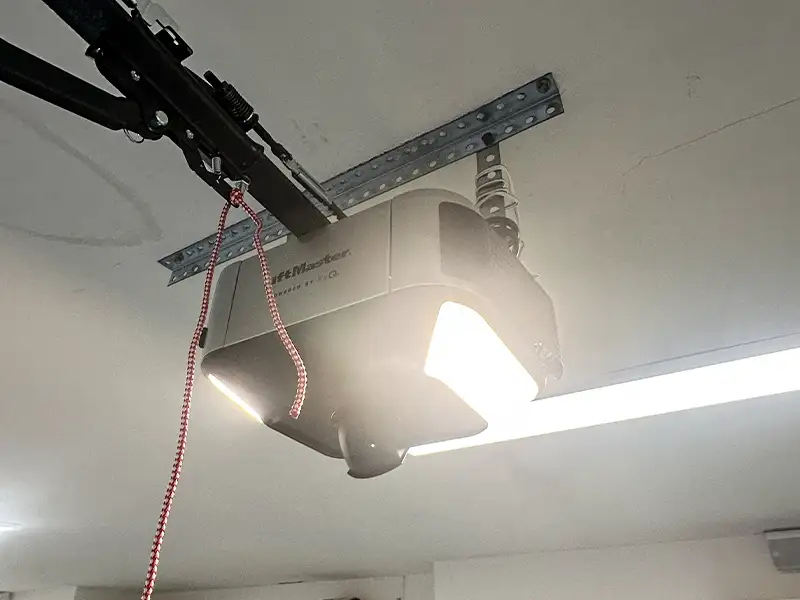
The power drops while your car is inside the garage, rain is blowing across the driveway, and the electric opener will not move the door. A1A Overhead Door Company helps Jacksonville-area homeowners avoid that exact access problem by installing and servicing Genie and LiftMaster garage door openers.
If you are searching for garage door opener battery backup in Jacksonville, the honest answer is not that every home needs one. Battery backup is valuable when the garage is a primary entrance, the door would be hard for someone in the household to lift manually, or losing vehicle access during an outage would create a real problem.
It can also be an unnecessary upgrade. If your garage has another practical exit, everyone who may need the door can safely operate a properly balanced door by hand, and outages rarely affect your plans, your money may be better spent on needed door repairs first.
Should You Add Battery Backup Before the Next Outage?
Best Fit: Your Garage Is a Critical Exit
Battery backup makes the strongest case when the garage is the normal route for a car, mobility equipment, work vehicle, or essential transportation. During a utility outage, a compatible opener can still run from its stored battery instead of leaving the motor inactive.
That does not turn the garage into an unlimited powered entrance. Battery capacity is finite, performance changes with battery condition, and every open-close cycle uses stored energy.
Genie states that its current model 7155 battery backup provides up to 50 cycles from the initial power failure. LiftMaster says the enclosed battery in its backup openers usually lasts one to two years depending on use and proper care, and that the opener provides a battery-status alert when replacement is needed.
Those are manufacturer statements for specific products and systems, not a promise that every battery or opener will perform the same way. Door weight, balance, temperature, battery age, installation, and the exact model all matter.
Strong Fit: Manual Operation Is Not Realistic for Everyone
An electric opener can stop when household power stops. A properly balanced garage door may still be opened manually after using the emergency release, but that is not a safe or practical plan for every person.
A tall or heavy door can be difficult to control. A door with a broken spring, damaged cable, binding track, or severe imbalance can fall or move unpredictably.
No. Stop using the door. This applies if it is crooked, unusually heavy, will not stay in position, has a broken spring, or has a loose cable. Do not pull the release and try to muscle it open; arrange garage door repair instead.
The U.S. Consumer Product Safety Commission says a severely unbalanced door can unexpectedly crash to the floor and that a door that binds, sticks, or is not balanced should be serviced by a professional. Battery backup is helpful, but it cannot correct a mechanical defect.
Strong Fit: You Want a Simpler Storm Plan
Northeast Florida residents do not need a sales pitch about storms. Jacksonville and the surrounding counties can see utility interruptions from wind, falling limbs, lightning, equipment failures, and other events.
Ready.gov advises households to identify what depends on electricity and plan for batteries or other alternate power sources. A charged opener battery can be one part of that plan, along with knowing the manual release procedure, keeping the door maintained, and leaving early when authorities issue evacuation instructions.
Battery backup does not make a garage door wind-rated, strengthen panels, or protect the opening from storm pressure. If wind performance is the concern, start with the door itself and review hurricane-compliant garage doors rather than expecting an opener battery to solve a structural issue.
When Is Battery Backup Not Worth the Added Cost?
Skip It When: Another Safe Exit Works
If the garage is detached, another exterior door gives dependable access, and no needed vehicle can be trapped, backup power may offer little practical benefit. A battery should solve a specific access problem, not become a box checked because a salesperson made it sound mandatory.
For a Jacksonville homeowner, the practical decision should come back to the house, the people using it, and the consequences of losing garage access. Buy the feature because it solves that problem, not because it appears on a product comparison sheet.
Repair First When: The Door Is Hard To Lift
Do not use battery power to cover up a door problem. The opener is designed to move a door whose springs and hardware carry and guide the load correctly.
If the door is heavy by hand, jerks, rubs, reverses without an obstruction, or makes new grinding noises, have the door inspected before choosing an opener. Repeatedly asking a motor and backup battery to move a binding or unbalanced door can reduce reliable performance and leave the underlying hazard in place.
A1A can evaluate the complete system through its garage door opener service. The right answer may be an opener with backup, a repair to the door, replacement of an aging opener, or no battery upgrade at all.
Skip a Retrofit When: Compatibility Is Unclear
Not every existing opener accepts an add-on battery. Some units have an integrated battery compartment, some use a model-specific accessory, and others were not designed for backup operation.
Do not buy a battery by voltage or appearance alone. The opener’s model number, manufacturer documentation, wiring design, available space, and control-board requirements have to match.
Electrical testing, internal wiring, and logic-board work are not DIY jobs. A wrong connection can damage the board, defeat safety functions, create shock or fire risk, or leave the door operating unpredictably.
Should You Replace the Opener or Add a Battery?
Choose an Integrated System When: The Opener Is Already Aging
A battery is only one part of an opener decision. If the existing unit is noisy, unreliable, incompatible with current safety accessories, or nearing replacement for other reasons, a new integrated backup model may make more sense than trying to adapt old equipment.
Current LiftMaster battery-backup options include belt-drive, chain-drive, and wall-mount configurations. Genie’s current battery-backup lineup also includes multiple models, including belt-drive units such as the 7155.
The drive style, door size, headroom, lighting, controls, smart connectivity, noise level, and serviceability deserve equal attention. A quiet belt-drive model may suit a garage below a bedroom, while another home may call for a different configuration.
Consider a Compatible Battery When: The Opener Supports It
If the opener runs well and the manufacturer specifically supports a replacement or accessory battery for that model, replacing a depleted battery can be sensible. Model verification comes first because similar-looking housings can use different parts.
Pay attention to the opener’s status light, beeps, or app notification as described in its manual. A battery that is installed but ignored can create false confidence until the next outage proves it no longer holds useful charge.
Replace the Door Problem First When: The Opener Is Straining
A fresh opener should not be treated as a stronger substitute for correct spring balance. The CPSC advises checking a door manually with the door closed before releasing it, and it warns that unbalanced or binding doors need professional service.
If the existing opener struggles, the first question is why. A trained inspection can separate a failing motor or control from worn rollers, damaged tracks, incorrect spring balance, or another door condition.
How much the Cost of Garage Door Opener Battery Backup in Jacksonville?
Cost Answer: The Setup Determines the Quote
There is no responsible single installed price that covers every Jacksonville home. A replacement battery for a compatible opener is a different job from installing a new battery-backup opener, and neither price says anything useful until the technician knows the model and door condition.
The total can change with the opener model, drive type, battery configuration, rail length, door height and weight, ceiling or wall-mount layout, electrical receptacle location, controls, accessories, removal of old equipment, and repairs needed to make the door operate safely. Product availability and manufacturer pricing also change.
Published national estimates are not a dependable substitute for seeing the actual door and selected equipment. A1A recommends a written quote tied to the model, installation conditions, and any door repairs that are genuinely needed.
That is the upfront answer. Ask what model is being proposed, whether the battery is included, what labor is included, what existing controls will work, and what future battery replacement involves.
How Should You Prepare and Maintain the Backup?
Before an Outage: Test the Whole System
Do not wait for storm warnings to learn how the opener behaves without utility power. Follow the manufacturer’s instructions for the exact model, confirm that the battery-status indication is normal, and make sure every regular user knows which entrance will work.
The door should also reverse correctly and the photoelectric sensors should be aligned and unobstructed. Battery operation does not bypass normal entrapment-protection requirements.
Have a professional address unexplained reversing, damaged wiring, burning odors, water intrusion, logic-board faults, or repeated battery errors. Do not remove covers and probe energized components.
During an Outage: Conserve Battery Cycles
Use the garage door only when needed. Repeated test cycles consume the same stored energy you may need later, and a long outage can outlast any opener battery.
If you must use the manual release, follow the owner’s manual and begin only with the door fully closed. Keep people clear, maintain control of the door, and stop if it feels unusually heavy, binds, hangs crooked, or will not stay in place.
Ready.gov also advises disconnecting appliances and electronics to reduce the chance of damage from surges when power returns. Follow the opener manufacturer’s instructions about reconnection and battery status after utility power is restored.
After an Outage: Check the Alerts
Restore normal operation according to the manual and verify that the door travels, stops, and reverses correctly. Listen for a battery warning and give the system time to recharge as the manufacturer directs.
If the backup did not operate, do not assume the battery alone is at fault. Charging circuitry, connections, battery age, opener settings, or a mechanical door problem may be involved, and internal electrical diagnosis belongs with a qualified service professional.
Frequently Asked Questions
Will a Garage Door Opener Work When the Power Is Out?
A standard electric opener will not run from household power during an outage. A compatible opener with a charged backup battery can operate for a limited number of cycles, while a properly balanced door may be operated manually by following its owner’s instructions.
Can I Add Battery Backup to My Existing Garage Door Opener?
Only if the manufacturer supports a battery or backup accessory for that exact model. Check the model label and documentation; do not improvise wiring or connect a generic battery to the logic board.
How Long Does a Garage Door Opener Battery Backup in Jacksonville Last?
There are two different questions: battery service life and outage capacity. LiftMaster says its enclosed battery usually lasts one to two years depending on use and care, while Genie says the model 7155 can provide up to 50 cycles from the initial power failure.
Does Battery Backup Make My Garage Door Hurricane-Rated?
No. Battery backup powers opener operation for a limited period; it does not change the door’s wind design, reinforcement, track, anchors, or approval status.
Can I Pull the Emergency Release During an Outage?
Follow the owner’s manual and start only with the door fully closed. Stop if the door is heavy, crooked, binding, has a broken spring, or has a loose cable, because the door can fall or move without control.
Do I Need Battery Backup if My Garage Has a Side Door?
Possibly not. If the side door provides dependable access and no essential vehicle or equipment would be trapped, battery backup may be a convenience rather than a need.
How Often Should the Backup System Be Checked?
Watch the opener’s battery-status alerts and use the test procedure and schedule in the exact model’s manual. Include the door’s balance, safety reversal, sensors, and hardware in routine professional service because backup power cannot overcome a mechanical defect.
What Is the Bottom-Line Decision?
Battery backup is worth considering when a power outage could trap a necessary vehicle, block the household’s practical exit, or force someone to handle a door they cannot safely control. It is less important when another safe entrance and transportation plan already solve the problem.
Start with the door’s condition, then choose the opener. A balanced, properly moving door with a compatible Genie or LiftMaster backup system is a sound plan; a struggling door with a battery attached is not.
A1A Overhead Door Company is a family-owned, non-franchised company founded in 2000 at 1520 Emma Ln, Neptune Beach, FL 32266. We serve Jacksonville and nearby communities across Duval, Nassau, Clay, and St. Johns counties in Florida, plus Camden County, Georgia.
Call 904-821-8463 or contact A1A Overhead Door Company to discuss the door, opener model, and access needs. We schedule service Monday through Saturday from 7 AM to 8 PM based on availability, and we are closed Sunday.
“When honesty, integrity, and the customer still count.”